





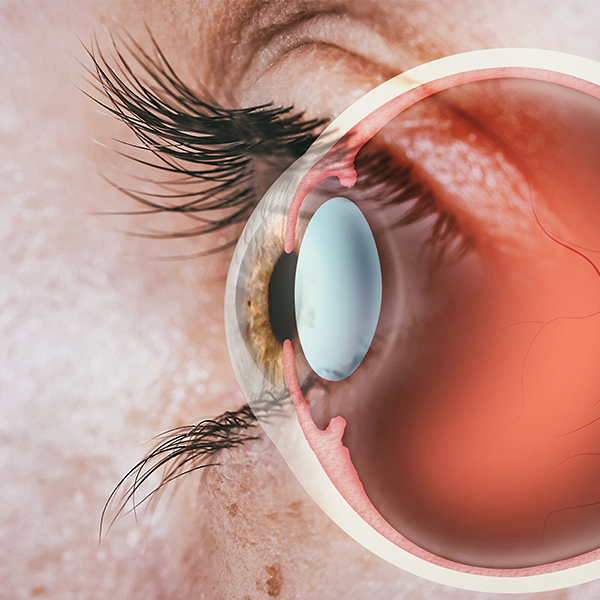
AMD Risk Factors & Prevention
Age and family history are important risk factors for AMD. While macular degeneration cannot always be prevented, healthy lifestyle choices may help support long-term eye and retinal health, including avoiding smoking, exercising regularly, maintaining a healthy weight, and eating a balanced diet rich in fruits, vegetables, and leafy greens.
For certain patients, an eye doctor may also recommend AREDS2 vitamins or nutritional supplements to help reduce the risk of AMD progression. Supplements are not appropriate for everyone and should be discussed with your eye care provider.
Treatment for Age-Related Macular Degeneration
There is currently no cure for AMD, but treatment and management options depend on whether you have dry AMD or wet AMD.
Wet AMD is commonly treated with medications that target vascular endothelial growth factor (VEGF) to help control abnormal blood vessel growth and leakage.
Dry AMD management may include regular retinal monitoring, lifestyle and nutritional recommendations, and, for certain patients, newer treatment options such as Low-Level Light Therapy (LLLT), also known as photobiomodulation (PBM).
Low-Level Light Therapy (LLLT) for Dry AMD
Low-Level Light Therapy (LLLT), or photobiomodulation (PBM), is a non-invasive treatment option that may be appropriate for certain patients with dry age-related macular degeneration.
PBM uses specific wavelengths of light designed to stimulate cellular activity and support the health and function of retinal cells. Research continues to evaluate photobiomodulation for dry AMD, including its potential role in supporting retinal health and visual function.
LLLT/PBM does not replace regular AMD monitoring or other treatments recommended by your eye doctor. If you've been diagnosed with dry AMD, our team can evaluate your retinal health, monitor changes over time, and determine whether Low-Level Light Therapy for dry AMD may be an appropriate part of your personalized macular degeneration treatment and management plan.
Protect Your Vision
Early detection and ongoing monitoring are important when managing age-related macular degeneration. If you've noticed changes in your central vision, have a family history of AMD, or have already been diagnosed with dry AMD, schedule a comprehensive eye exam.
Our team can evaluate your macular and retinal health, discuss your AMD treatment options, and help determine whether photobiomodulation or Low-Level Light Therapy may be right for you.